
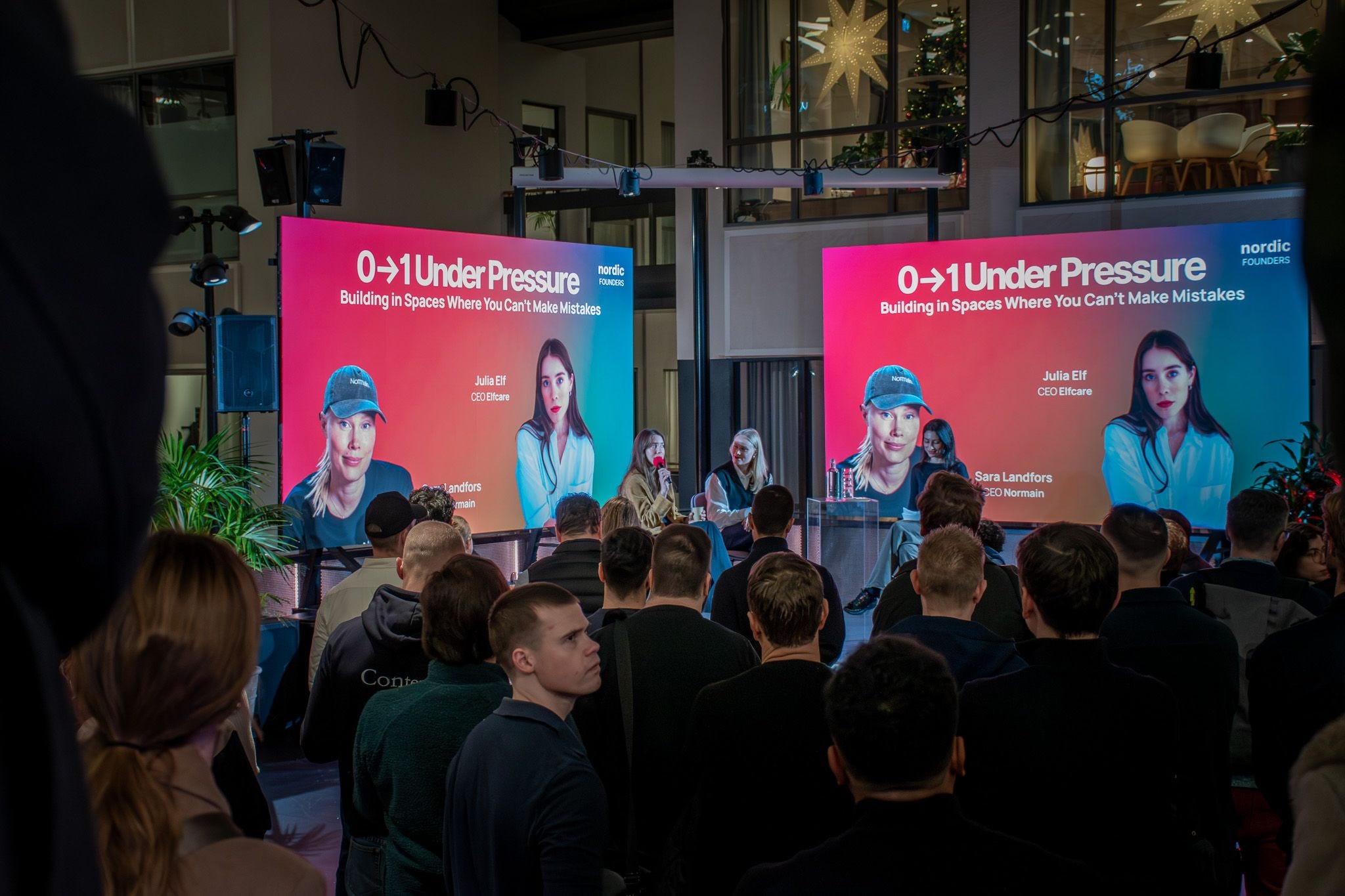
0-1 Under Pressure
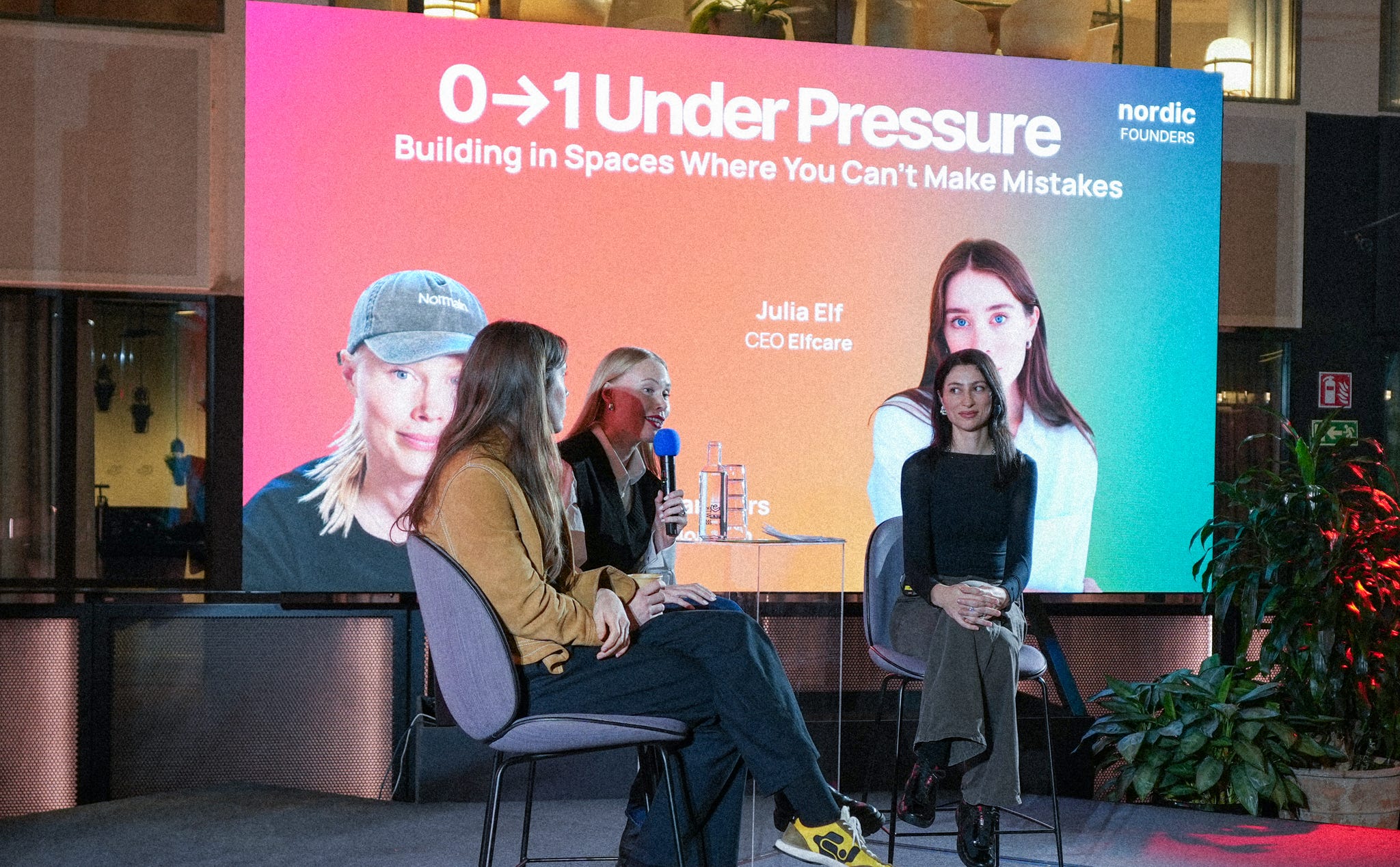
When you can’t break things: how to build 0-1 in high-trust industries with Julia Elf & Sara Landfors.

I think I’ll roll my eyes right out of my head if I hear “move fast and break things” one more time. That phrase has been so embedded into startup culture that it’s almost lost all meaning, and entered full blown cliché status.
To be clear, I don’t disagree. In 0–1, you should fail fast, pivot quickly, make mistakes, and learn as fast as possible.
But I also think this ethos is reductive and often gets used as an excuse for sloppy work. Also, there are whole industries where is simply doesn’t fit.
Healthcare?
Not a forgiving environment for mess-ups.
Working with Fortune 500 companies or Big Four consulting firms?
You won’t retain any of them if they’re being treated like beta users for a half-baked MVP.
Even if you’re scrappy behind the scenes, you need an air of precision on the surface because in these spaces, your reputation can be trashed instantly.
So how the hell do you build 0–1 when you can’t make mistakes?
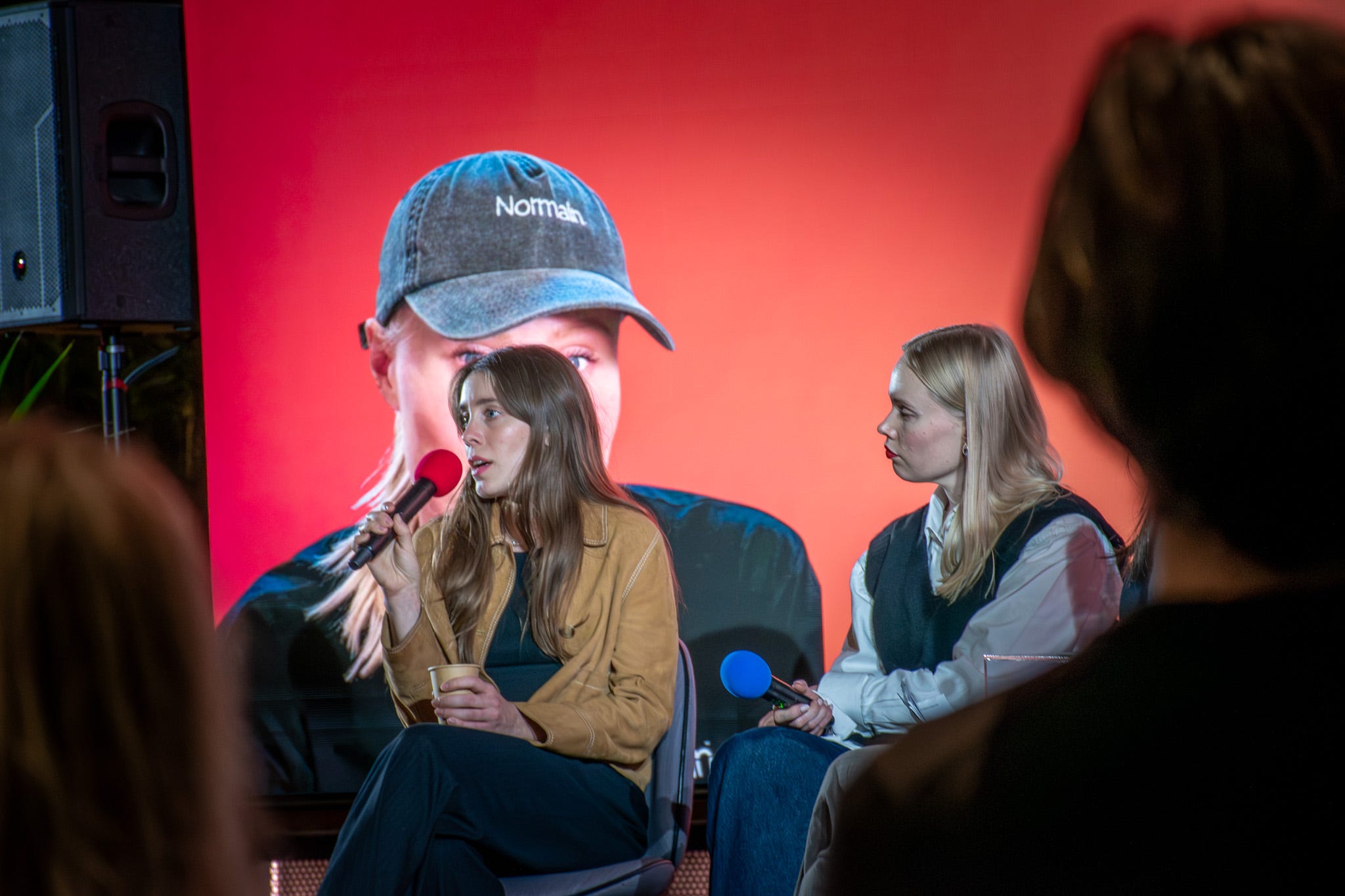
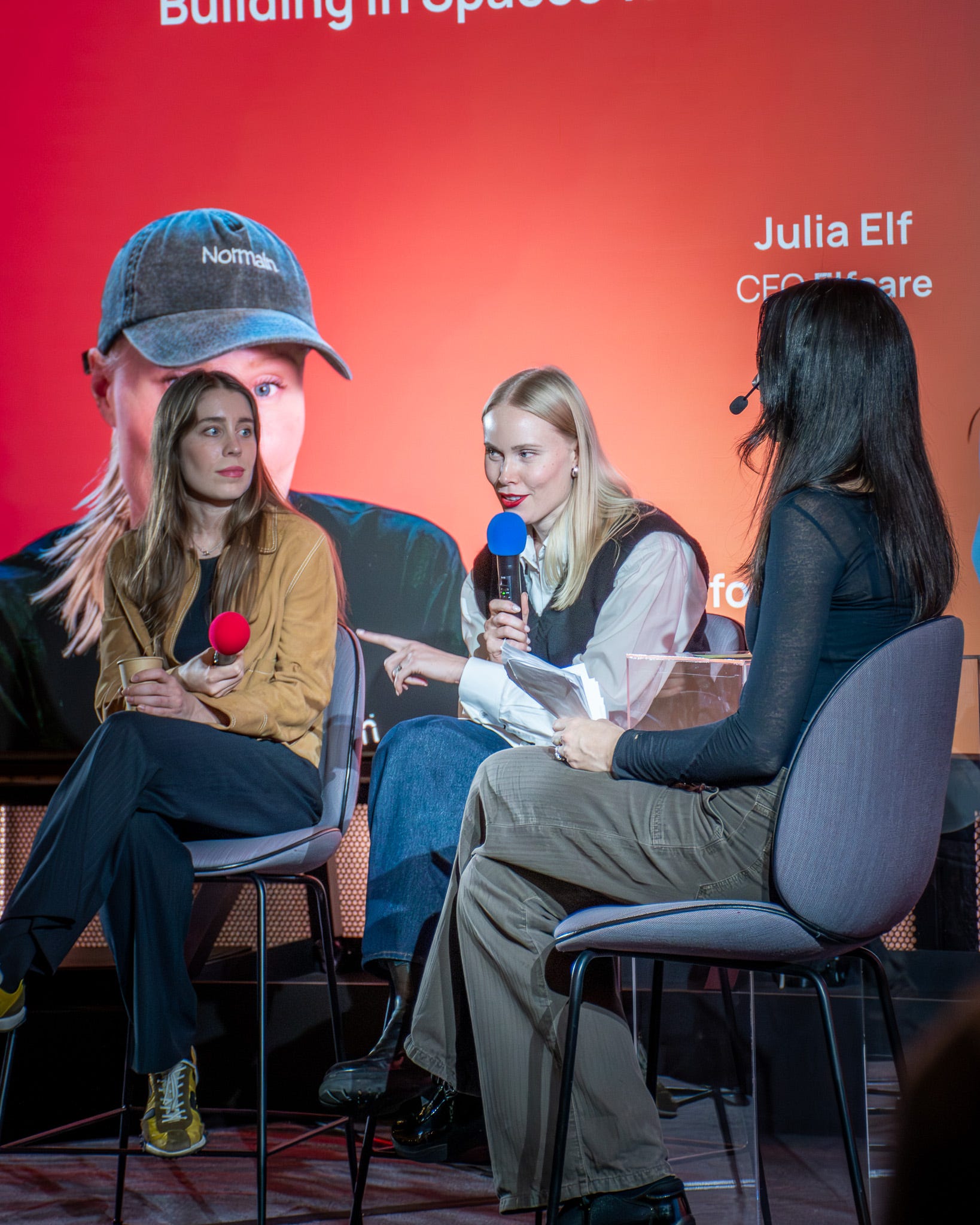
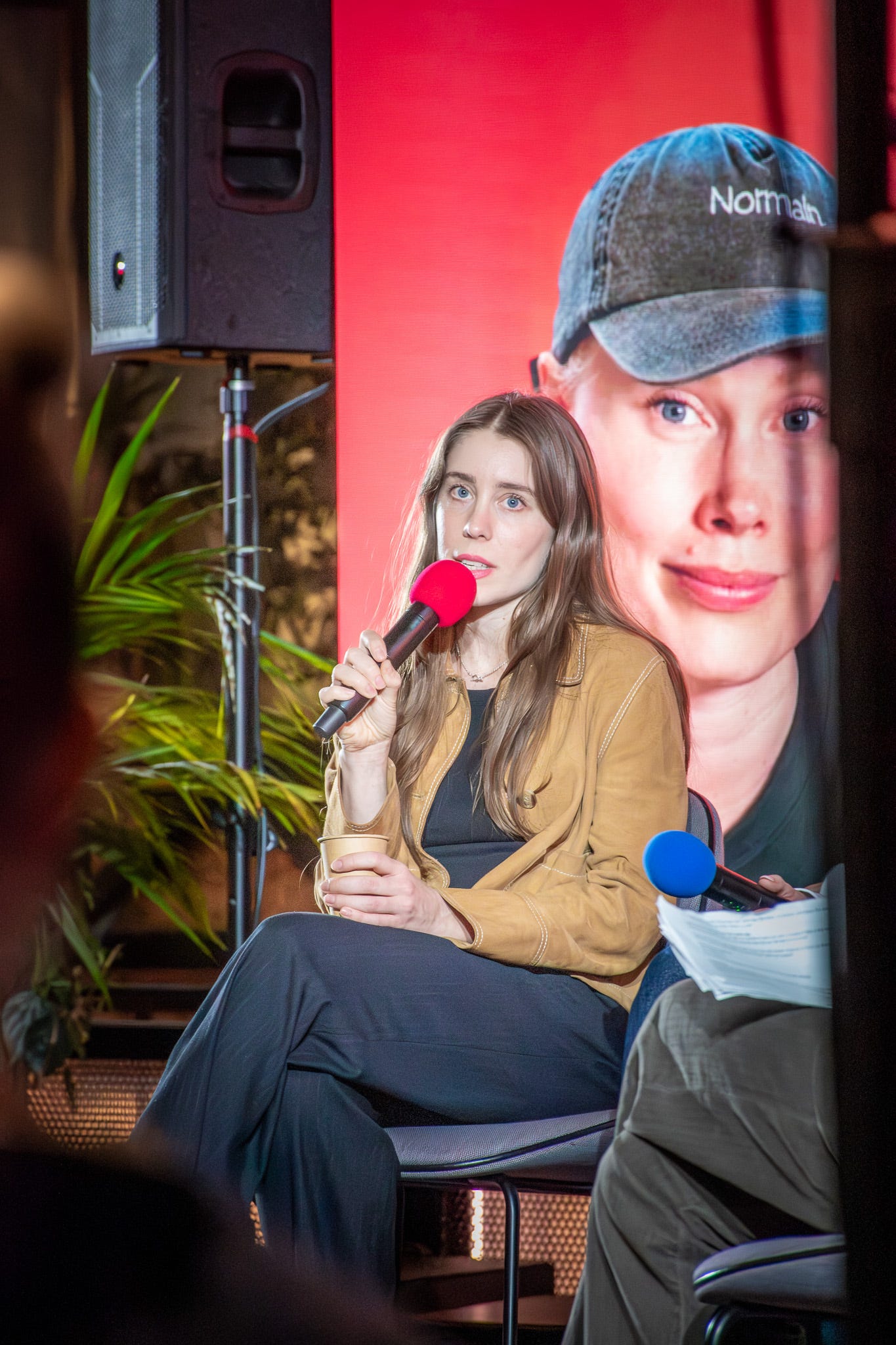
Julia Elf (Elfcare) and Sara Landfors (Normain) are two of the most promising early-stage founders in the Nordics. Julia is building in healthcare. Sara works with Big Four consulting firms. And they’re both very much still in the thick of 0–1.
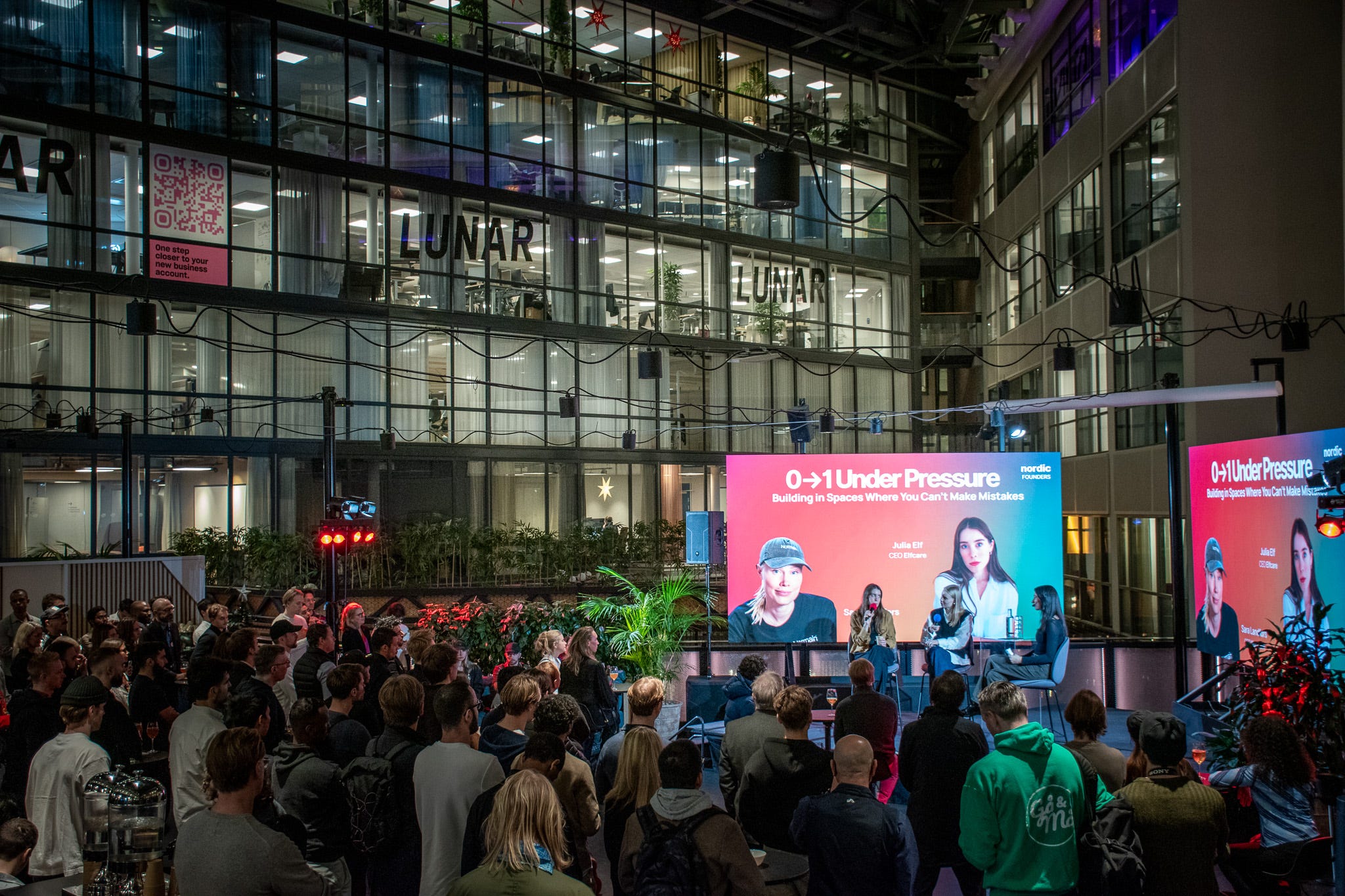
I sat down with them to figure out how they balance moving fast with the level of precision these industries demand.
DECISION-MAKING IS THE JOB
I was interested in their paths through the prestige pipeline. Impressive academic backgrounds, followed by stints at BCG. And whether that experience helps or actually hinders them as founders.
They learnt a whole lot about excellence and gained a clear understanding of what ‘great work’ actually looks like. Which is crucial in the spaces they’re building.
But intuitively, I’d assume it wouldn’t produce the kind of outlier, innovator, outside-the-box profile you expect from future unicorn founders.
Their background screamed conformity.
It shouts, “I’m really good at colouring inside the lines.”
It says, “I only work with 100% of the information and perfect conditions.”
I’d assume that their early experience could wash out the kind of hardcore risk-taking and tolerance for uncertainty required to succeed in 0–1 tech.
And to be fair, for many people I’m sure it does. But for them, there was only one major trait that held them back at first.
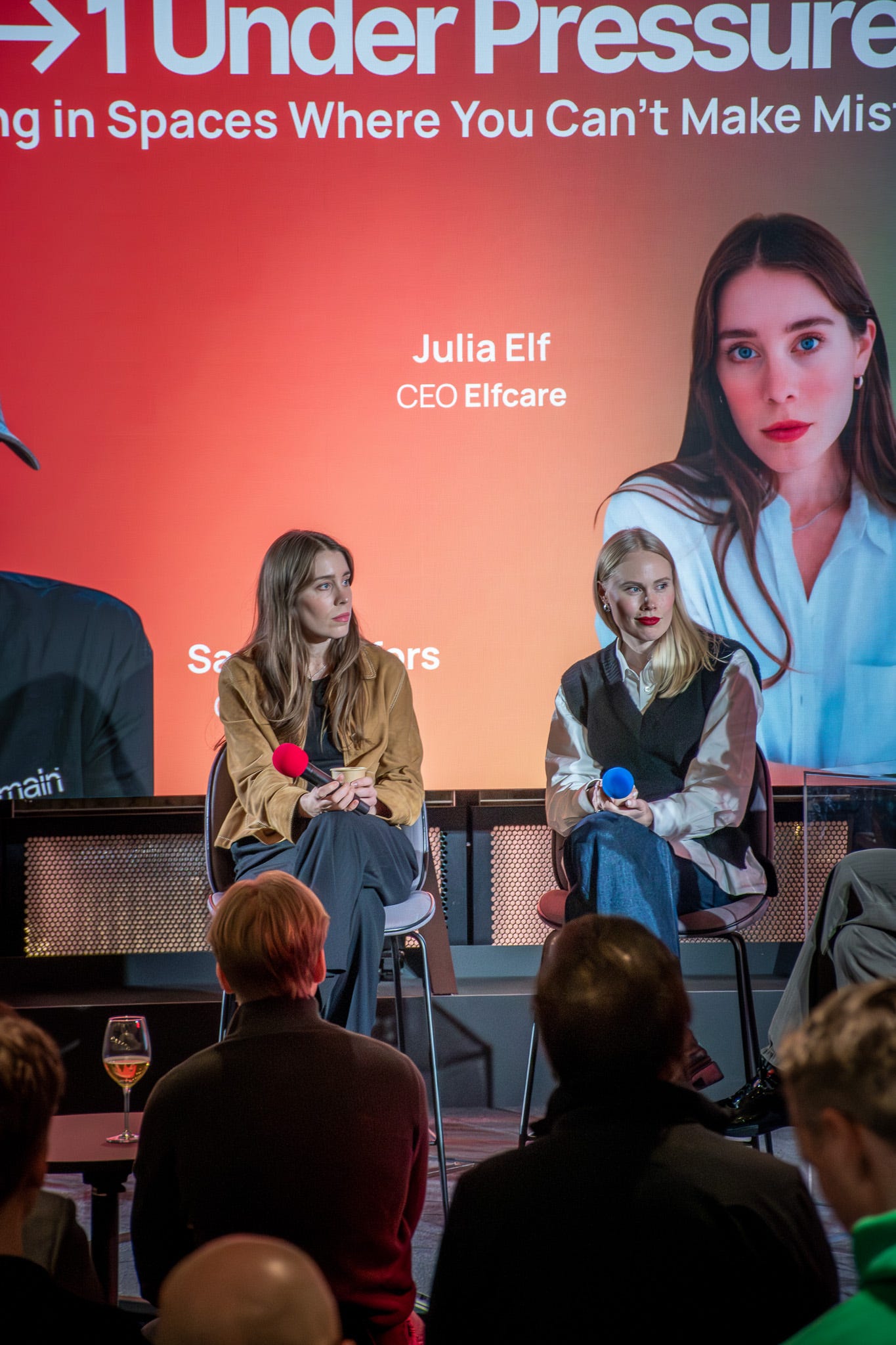
What Julia and Sara articulated was that for people coming from consulting or corporate environments, there’s often a tendency to confuse thinking with progress. And being a founder is all about ACTION.
For anyone coming from traditional employment or education, where you’re a cog in a much larger machine → the jump from employee to founder can be really hard.
That’s why this line landed so hard:
“Consultants advise. Founders decide.”
That gap matters more than most people realise. What their background hadn’t given them was a strong decisions making muscle, but one they’ve worked hard on and mastered.
As a founder, no one else makes the call for you.
You decide:
who you hire and who you let go
which customers you say yes or no to
what product directions you commit to
And those decisions don’t arrive neatly sequenced. They arrive constantly and often with incomplete information, usually under time pressure.
Decision-making is the work. Strategy and analysis help but neither replaces the moment where you actually choose and live with the consequences.
There’s a rule Jeff Bezos has talked about for years that’s useful in 0→1: most decisions should be made with around 70% of the information.
Waiting for 90–100% usually means you’re moving too slowly.
In fast-moving environments, the cost of delay often outweighs the cost of being wrong. Bezos distinguishes between one-way doors (irreversible decisions that deserve real caution) and two-way doors (reversible ones where learning and course-correction matter more than certainty).
What mattered in this conversation is that Julia and Sara apply the same logic: decide early, adapt fast, and don’t confuse caution with progress.
If you have a similar background, head to the end of this article to see what skills you should keep hold of and what you should drop.
0→1 takeaway
Delay is still a decision and usually the worst one
Discomfort is a prioritisation signal, not a warning sign
Decision velocity compounds faster than strategy ever will
THE IDEA IS NOT THE WORK, STARTING IS
Something that emerged early in the conversation was how much founders over-intellectualise the idea as a way to delay exposure.
The idea becomes a shield.
A way to stay theoretical.
A way to avoid being seen and avoid failing.
Julia and Sara were refreshingly direct about this.
“The idea is probably 10% of the company.”
And yet, how often do you hear some version of:
“I could start if I just had the right idea.”
That’s not a blocker, it’s an excuse.
They described something many founders recognise but rarely name: shadow careers. Lives that orbit what you want to do without ever fully committing to it. Close enough to feel productive. Far enough to protect your ego.
The real work doesn’t start when the idea feels elegant.
It starts when you expose it to reality.
“Talking to customers is execution.”
That line matters because it collapses a common illusion: that you’re “doing the work” when you’re still thinking, planning, or refining in isolation. You’re not. You’re avoiding contact with the market.
The idea myth and shadow careers are the same pattern at different scales:
If I don’t start, I can’t fail.
But the cost of not starting is rarely neutral. It shows up as stagnation, over-thinking, and the slow erosion of confidence.
0→1 takeaway
Treat starting as the commitment not certainty that the idea will work
Your first idea is disposable; delay is not
If you feel stuck, it’s probably emotional, not strategic
Most founders don’t need better ideas. They need to cross the psychological line where exposure begins.
MVP ≠ SCRAPPY
IT MEANS CONSTRAINED RISK
A lot of early-stage advice assumes that mistakes are cheap. That breaking something is an inconvenience, not a lasting liability.
That assumption collapses the moment trust becomes part of the product.
What Julia and Sara described is a very different skill: not moving slower, but being extremely deliberate about where failure is allowed.
They were consistent on this point:
“Some things must be perfect. Some things don’t.”
“The clinical core is non-negotiable.”
“Differentiate where you go 100% versus 80%.”
“You need to choose where you accept risk.”
That framing completely changes what an MVP means.
They aren’t building scrappy versions of everything and hoping to fix it later. They’re building perfect cores inside incomplete shells. The surface can evolve. The core can’t fail.
Once you break trust, with users, customers, or regulators, you don’t get a clean reset, you inherit permanent damage.
An MVP isn’t about minimum features.
It’s about minimum irreversible failure.
0→1 takeaway
MVP = the smallest thing that cannot afford to break
Perfect what can’t be fixed later: trust, safety, compliance
Everything else ships early and improves in public
In any industry at 0→1, speed still matters.
But precision decides what you’re actually allowed to move fast on.
CO-FOUNDERSHIP
When people talk about choosing a co-founder, it’s often framed like a marriage. Sometimes even more important than your actual marriage.
And in a way, that makes sense. A co-foundership isn’t a six-month experiment. It’s a decade-plus commitment and can be the most intense, identity-shaping relationship of your adult life.
But what happens when that long-term commitment overlaps with an actual romantic relationship?
Both Julia and Sara are living that reality. They’re building companies with their romantic partners. And I was genuinely curious about what the reality looks like, beyond the version that gets romanticised.
On the surface, it sounds idyllic. No separation and total alignment. You’re building something meaningful together, all the time.
And I can admit parts of that feel seductive to me too. I love the idea of building a business with my fiancé. It feels so clean in theory, I mean our life is already startup in so many ways.
It would mean no switching contexts.
No choosing between “should I stay late and work?” or “should I go home and connect?”
No constant negotiation between two competing worlds.
But I also wondered: do you miss the separation?
Do you miss having somewhere to switch off?
They were unanimous: no.
They don’t draw hard boundaries between work and life.
They don’t “switch off” in the conventional sense.
They work, talk about work and think about work constantly. Not because they feel trapped by it, but because they love it.
It feels fulfilling. Energising. Obsessive, maybe, yes but in a way that feels honest.
You would think, being cofounders with your husband/wife/boyfriend/girlfriend could make life more complicated. The arguments, the money, the resentment. But they described the opposite. In many ways, it simplifies things.
Everything becomes one integrated thing. One shared mission. One set of tradeoffs. One reality.
Which is why they were so clear about what actually matters:
“You can’t be polite.”
“If something feels off, it gets worse.”
“We disagree all the time.”
But you don’t need to be romantically involved with your co-founder for this to apply.
The underlying lesson isn’t about romance. It’s about duration, intensity, and proximity.
Any real co-foundership, if it works, becomes:
long-term (years, not months)
emotionally charged
identity-shaping
impossible to fully compartmentalise
Even if you go home to different partners, cities, or lives, the pressure is shared. The decisions linger and the stakes can bleed into everything else.
What Julia and Sara surfaced is what’s usually left unsaid:
At some point, every serious co-foundership behaves like a relationship, whether you acknowledge it or not.
You may not talk every evening.
You may not share a home.
But you are tied together through:
risk
reputation
responsibility
and consequences that don’t clock out at 6pm
That’s why the same rules apply.
0→1 takeaway
Avoidance compounds faster than conflict
Unspoken tension doesn’t stay “professional”, it metastasises.Politeness is often fear in disguise
You’re eroding trust if you’re protecting harmony instead of truth.Respect matters more than alignment on paper
Titles, roles, and equity don’t survive pressure but respect does.There has to be a shared arbiter
“What’s best for the company?” isn’t just a principle, it will be the only mechanism that prevents resentment.
The difference between romantic and non-romantic co-founders isn’t whether this intensity exists.
It’s whether the relationship, in whatever form it takes, is actually strong enough to carry the weight of the company you’re trying to build.
WORK–LIFE BALANCE IS THE WRONG QUESTION
Burnout is usually framed as a scheduling problem.
Too many hours.
Too few breaks.
Bad calendar hygiene.
That wasn’t how Julia and Sara talked about it at all.
They framed it as an alignment problem.
Not whether they were working too much but whether the work itself felt necessary and worth carrying.
They were both clear about the reality of how they live and work:
“There is no work–life balance for me.”
“This is an authentic expression of who I am.”
“I love working.”
What struck me was the lack of conflict. There was no sense that work was something to be negotiated against life, it was simply integrated into it.
That doesn’t mean they never get tired. It doesn’t mean pressure disappears. But it does explain why the work doesn’t register as burnout in the way we usually describe it. The effort isn’t fighting against who they are, it’s coming from it.
This is where a lot of founders quietly go wrong. They import someone else’s version of balance and then wonder why they feel guilty, fractured, or constantly “behind.” Especially in 0→1, when the company is fragile and the stakes are personal, borrowed rules tend to break.
This isn’t an argument for working all the time.
It’s an argument for telling the truth about the season you’re in.
0→1 takeaway
Stop copying other people’s balance rules
Optimise for alignment, not hours
Be honest about the season you’re in
Burnout doesn’t always come from doing too much.
Sometimes it comes from doing work that isn’t actually yours to carry.
SIMPLICITY IS A COMPETITIVE ADVANTAGE
The most common mistake I see early stage founders make is over complication and trying to do everything at once. The number one skill I see in founders who succeed is focus and ruthless prioritisation.
One of the fastest ways early-stage founders slow themselves down is by overbuilding systems, not just in product, but in how they work.
Productivity stacks. Dashboards. Content plans. Visibility strategies. All designed to make things feel “under control.”
What came through in this conversation was what I believe to be the right instinct:
“Simplicity is everything.”
Sara described moving away from elaborate Notion systems and back to pen and paper. Not because tools are bad but because complexity quietly increases cognitive load.
Every extra system becomes something else to maintain, interpret, and think about.
The same discipline showed up elsewhere:
“Customers first. Always.”
Fast response times weren’t framed as a growth tactic. They were treated as table stakes and a North Star to measure everything else by. A sign that attention is being spent where it matters most.
The common thread here isn’t minimalism for its own sake, it’s cognitive clarity.
The goal isn’t to do less.
It’s to make fewer decisions about unimportant things.
Anything that doesn’t directly serve customers or improve decision-making should be allowed to collapse under its own weight.
0→1 takeaway
Filter everything through a prioritisation framework
Systems should reduce thinking, not add to it
Remember, you can’t do everything, so stop trying
In 0→1, simplicity isn’t a nice-to-have.
It’s how focus survives long enough to compound.
When I asked them what their driving force is I was surprised by the purity of their answers. I thought it might be money, fear, a childhood wound. But it wasn’t some grand vision or obsession with winning. They’re not driven by hype, exits, or proving anyone wrong.
What came through instead was responsibility and alignment: a need to do the work properly, to honour the trust customers and teams place in them, and to keep building something that feels honest to who they are.
That’s very different from what early-stage founders often think they need. They’re told to manufacture urgency, passion, or relentless ambition. But listening to Sara and Julia, it felt almost inverted.
The work wasn’t motivating because it was exciting all the time, but because not doing it would feel like a betrayal to their inner most calling to build.
Across decisions, work, relationships, and execution, the through line wasn’t balance or speed, it was coherence.
📚 Book recommendations
The Mom Test → by Rob Fitzpatrick
Why read it:
Stops you lying to yourself during early validation.
What it helps with:
Asking non-leading customer questions
Avoiding false validation and polite encouragement
Separating real demand from nice words
If you’re building and hearing “this is interesting” a lot, this book will save you months.
The War of Art → by Steven Pressfield
Why read it:
Names the psychological resistance that keeps you from starting.
What it helps with:
Fear, avoidance, and procrastination
Creative honesty
Doing the work instead of circling it
This isn’t about startups. It’s about getting out of your own way.
📦 CONSULTING BACKGROUND?
WHAT TO KEEP / WHAT TO DROP
KEEP
Clear agendas and decision owners
Structured thinking under pressure
Concise, explicit communication (especially in writing)
Respect for standards where trust is at stake
Calmness in complex, high-stakes situations
DROP
Waiting for consensus
Over-polished decks instead of real decisions
The instinct to get to 100% certainty
Confusing analysis with progress
Deferring hard calls because you’re “not ready yet”
REPLACE WITH
Decision velocity
Ownership over escalation
70% information, then act
Clear accountability instead of alignment theatre
Structure is useful. Hesitation is not.